
 English
 русский
 Español
 中文简体
中文简体Battery storage systems are everywhere now. Solar backup. EV charging. Industrial UPS units. But inside those cabinets, wires run everywhere. Lots of wires. High current. Low voltage signals. Temperature sensors. Communication lines. An energy storage harness organizes all of that. It bundles wires together. Labels them. Protects them from heat and vibration. Without it, installers spend hours tracing cables. With it, the system works the first time.
Why Energy Storage Needs Special Wiring
High currents and low voltages mean voltage drop is a real problem
A solar battery runs at 48V or 400V. High current means thick wires. Thick wires are hard to bend. Hard to route. An energy storage harness uses the right gauge for each connection. Big wires for power. Small wires for signals. The harness keeps them separate. Signal wires next to power wires pick up noise. The harness twists signal pairs or shields them.
Voltage drop matters more at low voltages. A 48V system loses 2V across a long cable. That is 4 percent loss. In a 400V system, 2V is nothing. The energy storage harness designer calculates wire length and gauge for each connection. No guessing.
Batteries get hot during charging and discharging
Heat ages wires. Insulation gets brittle. Copper corrodes faster. An energy storage harness uses high-temperature wire. 105°C or 125°C rating. Standard wire is 80°C. Fine for a lamp. Not fine inside a battery cabinet where ambient temperature hits 60°C.
The harness also routes wires away from hot spots. The battery terminals themselves get hot. The harness keeps wires clear. No melting. No shorts.
What Goes Inside an Energy Storage Harness
Power cables for battery-to-inverter connections
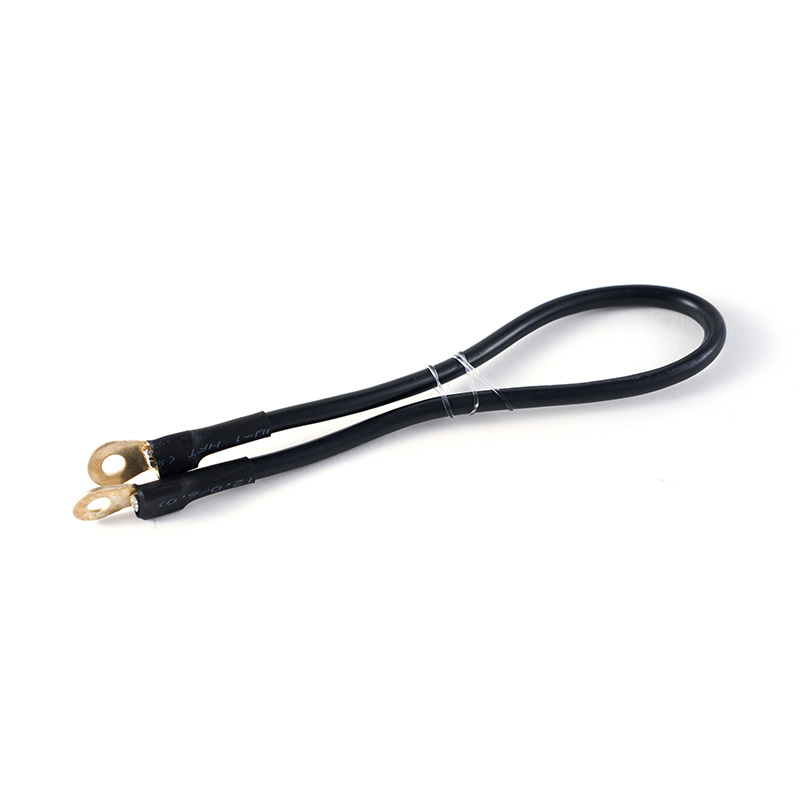
The thickest wires in an energy storage harness carry main power. Battery positive and negative to the inverter. Often 25mm², 35mm², or even 50mm² cable. The lugs are crimped, not soldered. Soldered lugs crack from vibration. Crimped lugs hold.
The insulation is cross-linked polyethylene or similar. Tough stuff. Resists abrasion. Does not melt easily.
Sense wires for battery management system monitoring
Each battery cell needs monitoring. Voltage. Temperature. Sometimes current. An energy storage harness includes small-gauge wires from each cell to the BMS. These wires carry no power. Just signals. But if they break, the BMS loses visibility. The system shuts down.
Here is what the sense wires need to do reliably:
- Stay connected through years of thermal cycling
- Avoid picking up noise from nearby power cables
- Route cleanly without getting pinched by battery modules
- Terminate at the correct pin on every connector
- Communication cables for battery-to-battery data
Multiple battery modules talk to each other. CAN bus or RS485. An energy storage harness includes twisted pair cables for data. The twist cancels out interference. Shielded cable is even better. The shield connects to ground at one end only. Grounding both ends creates a ground loop.
How a Good Energy Storage Harness Is Assembled
Wire cutting and stripping need precision
An energy storage harness has dozens of wires. Each wire is a specific length. Cut too short, it does not reach. Cut too long, it bunches up. Automated cutting and stripping machines do the work. Length tolerance plus or minus 2mm. No more.
Stripping length matters too. Too long, and copper shows outside the terminal. Too short, and the terminal crimps on insulation, not copper.
Crimping terminals must meet pull-test standards
Every terminal on an energy storage harness gets crimped with a calibrated tool. The crimp height is measured. Sample crimps get pulled in a tester. The wire should break before the crimp lets go. No exceptions.
Cheap harnesses use poor crimps. The terminal falls off the wire inside the battery cabinet. The system fails. The technician spends hours finding the loose wire.
Labels tell the installer where each connector goes
An energy storage harness with no labels is a nightmare. Dozens of identical black wires. Which one goes to battery 3? Which one to battery 4? Good harnesses have shrink-tube labels on each wire. Battery 1 positive. Battery 1 negative. Temp sensor 1. CAN high. CAN low.
The installer works fast. No guessing. No mistakes.
What Goes Wrong with Cheap Energy Storage Harnesses
Wire insulation melts from battery heat
Cheap energy storage harness products use standard PVC wire. 80°C rating. Fine for a desk lamp. Inside a battery cabinet, ambient temperature hits 60°C. The wire itself gets hotter from current. The insulation softens. Wires short against each other. The system shuts down. Batteries get damaged.
Crimp terminals corrode from vibration and humidity
Battery cabinets are not sealed. Humidity gets in. Cheap terminals have thin plating. Tin or plain copper. They corrode. The connection resistance goes up. The terminal heats up. More corrosion. More heat. Eventually the terminal fails.
Good terminals have thick nickel or silver plating. They do not corrode. Years later, still shiny.
The harness does not fit because wire lengths are wrong
Cheap harnesses are cut by hand. The worker eyeballs the length. Some wires are too long. Some too short. The installer forces the harness into the cabinet. Wires get pinched under battery modules. Insulation wears through. Short circuit. Fire risk.
An energy storage harness looks simple. Wires. Terminals. Connectors. But a bad harness takes down the whole battery system. A good harness works for years. Buy from a supplier that uses high-temperature wire, precision crimping, and clear labeling. Test a sample before ordering a hundred. The hour you spend testing saves days of troubleshooting later. Batteries are expensive. The harness that connects them should not be the weak link.