
 English
 русский
 Español
 中文简体
中文简体Modern communication systems rely heavily on stable and protected signal transmission. In environments such as defense systems, industrial control networks, and sensitive data centers, wiring design plays an important role in maintaining signal integrity. The Communication Security Wiring Harness is developed to organize and protect multiple signal lines within a controlled structure.
Instead of handling individual cables separately, the Communication Security Wiring Harness groups and secures them to reduce interference and physical damage during operation.
Structural Design and Cable Organization
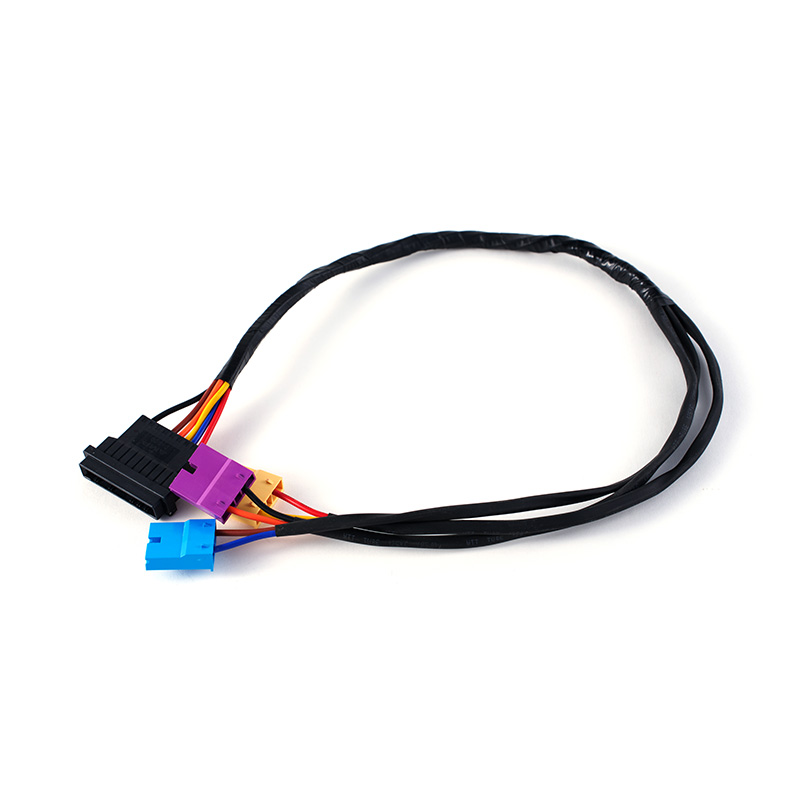
A Communication Security Wiring Harness is built using bundled wires, protective insulation layers, and shielding materials. These components work together to maintain organized routing inside complex systems.
In a Communication Security Wiring Harness, each wire is assigned a defined path to reduce overlap and confusion in signal transmission. This helps maintain clearer separation between power lines and data lines.
Protective outer layers are often made from materials such as PVC, PTFE, or braided shielding. These materials help reduce external impact from vibration, heat, and environmental exposure.
Signal Protection and Interference Control
One of the key functions of a Communication Security Wiring Harness is reducing electromagnetic interference. When multiple cables operate in close proximity, unwanted signal disruption can occur.
A Communication Security Wiring Harness uses shielding techniques such as grounded braiding or foil wrapping to limit signal distortion. This helps maintain stable communication between connected systems.
Twisted pair configurations may also be used inside the harness to reduce noise between adjacent wires. This is especially important in high-frequency data transmission environments.
Applications in Secure Communication Systems
This type of wiring system is widely used in defense equipment, aerospace systems, industrial automation, and secure communication networks. A Communication Security Wiring Harness helps organize complex wiring layouts inside control panels and electronic units.
In military vehicles and aircraft, wiring harnesses are designed to handle vibration, temperature changes, and electromagnetic exposure. Industrial machines also use similar systems to maintain stable communication between sensors and controllers.
Data centers may also rely on structured harness systems for internal equipment connections, where organized cabling supports maintenance and system upgrades.
Manufacturing Process and Assembly Considerations
Production of a Communication Security Wiring Harness involves wire cutting, terminal crimping, bundling, and insulation wrapping. Each step must follow defined specifications to maintain consistency across units.
In a Communication Security Wiring Harness, connector alignment is carefully checked to ensure proper mating with system interfaces. Incorrect alignment may affect signal continuity or cause connection instability.
Testing procedures are applied before installation, including continuity checks and insulation resistance measurements. These steps help verify that each harness meets system requirements.
Environmental Resistance and Durability
Wiring harnesses used in secure systems often operate in challenging environments. A Communication Security Wiring Harness may need to withstand moisture, dust, and temperature variations depending on installation conditions.
Protective coatings and sealed connectors are used to reduce exposure to external elements. In some cases, additional shielding layers are added for systems exposed to strong electromagnetic fields.
Durability is also influenced by mechanical stress. Cable routing is designed to reduce bending pressure and avoid sharp angles that could affect long-term performance.
Maintenance and System Integration
Proper installation and maintenance are important for system reliability. A Communication Security Wiring Harness is typically routed through designated channels or trays to avoid interference with moving components.
Periodic inspection may include checking connectors, verifying insulation condition, and confirming signal stability. In complex systems, modular harness design allows easier replacement of sections without dismantling the entire network.
Structured Cabling for Secure Communication
In modern communication and control systems, organized wiring plays a functional role in maintaining stable signal flow. The Communication Security Wiring Harness supports this requirement by combining structured routing, shielding methods, and durable materials.
Its use in industrial, aerospace, and secure network environments reflects how wiring design contributes to consistent communication performance in complex electronic systems.