
 English
 русский
 Español
 中文简体
中文简体Take a moment to open up a washing machine or refrigerator, and you’ll see a jumble of internal wires. You’ll spot red, black and blue cables in varying thicknesses, running in all directions inside the device. This messy layout is fixed by Household Appliances (Equipment) Wiring Harness, which bundle scattered wires in order, provide effective protection, and ensure the stable operation of home appliances.
What the Harness Actually Does
It turns loose wires into one assembly
We can simply regard the wiring harness as the nervous system of household appliances. The control board acts as the device’s brain, while the harness functions like nerves throughout the equipment. It transmits control signals to the motor, delivers power to the compressor, and controls the switch of heating components. No appliance can operate normally without a complete wiring harness.
Besides signal and power transmission, the harness also offers solid protection for internal wires. Inside household appliances, there are moving parts, high-temperature areas and sharp structural edges. The wiring harness can standardize the wiring path and keep wires away from these risky areas to avoid damage.
What Goes into One
Wires, connectors, and protection
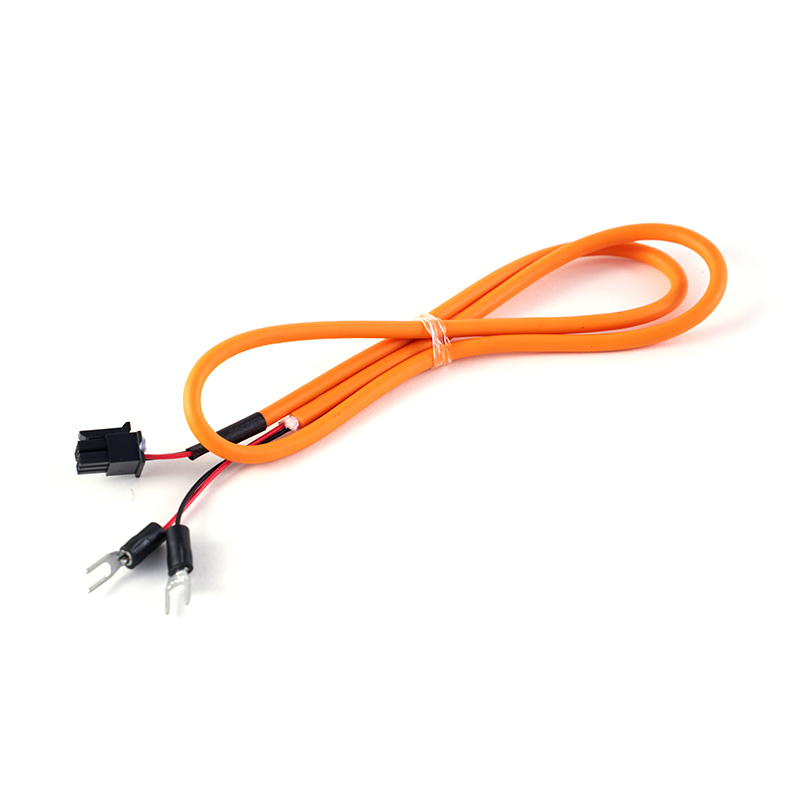
The production of a wiring harness follows a strict process: each wire is cut to a precise length, terminals are crimped firmly on wire ends, and matched connectors are installed. After assembly, all wires are bundled as a whole, wrapped with insulating tape or sleeved with protective tubing for extra safety.
Connectors are a core component of the harness, and model matching is critical. The connectors used for washing machine control boards are completely different from those for refrigerator compressors, so manufacturers must select the right accessories for different appliance parts to avoid functional failures.
A standard complete wiring harness mainly includes the following parts:
- Wires tailored to accurate lengths
- Firmly crimped terminals on wire ends
- Component-matching connectors
- Protective accessories such as insulating tape and tubing
- Identification labels for convenient installation and inspection
Where You Find Them
Washing machines
In washing machines, the wiring harness connects the core control board to key components including motors, water inlet valves and door locks. It is laid around the drum with a reasonable path, effectively avoiding all moving mechanical parts to prevent wear and tear.
Refrigerators
All key functional parts of refrigerators, such as compressors, cooling fans, internal lighting and defrost heaters, are connected to the central control board through dedicated wiring harnesses to realize unified intelligent control.
Ovens and cooktops
Ovens and stoves are high-temperature household appliances, so their internal wiring harnesses adopt special high-temperature resistant wires. The matched insulating materials can withstand bad heat up to 500 degrees without melting or aging.
What Buyers Should Check
Wire gauge must match current
Different components consume different currents: motors require far more power than ordinary sensors. If thin wires are mistakenly used for motor circuits, overheating will inevitably occur, bringing hidden dangers to equipment use.
Crimps need to hold
Unqualified crimping will cause poor contact resistance, which will generate extra heat and eventually lead to terminal failure. Qualified crimping is uniform and firm, so that the wire itself will break before the crimped connection loosens.
Connectors need to lock
Loose connectors are a common cause of appliance malfunctions. They may lead to the motor failing to start or the heating element staying on continuously, both of which will seriously affect normal use.
Why It Matters
A bad harness costs you
Defective wiring harnesses are the main cause of frequent appliance maintenance failures. Maintenance personnel often find broken wires or loose connectors during after-sales repairs, which not only annoys users but also damages the brand’s reputation.
A good harness speeds production
High-quality standardized harnesses simplify the assembly process for factory workers. Staff can directly take and plug in the harness without repeated debugging and modification, which greatly improves assembly efficiency and reduces assembly errors.
A good harness lasts
A well-made wiring harness features durable wires, fixed connectors and stable insulation. It will not easily break, loosen or melt during long-term operation, ensuring the long service life of household appliances and bringing a good user experience.
Consumers never choose a home appliance based on its internal wiring harness, but harness failures are always the usually complained-about appliance problems. This proves that details determine quality. The crimping process, connector matching, wiring layout and other trivial details are the key to product quality.