 English
 русский
 Español
 中文简体
中文简体If you need any help, please feel free to contact us
In modern manufacturing, producing consistent, durable, and precise metal parts is essential. Hardw...
READ MORE
Free Quote

Hardware stamping is a precision manufacturing process used to produce high-quality metal parts by applying pressure to a sheet of metal. This technique involves the use of stamping machines to shape the metal into specific designs, often by cutting, bending, or embossing it. Hardware stamping is widely used in the production of various components for industries such as automotive, electronics, construction, and consumer goods. The process allows for high-volume production of complex parts with consistent quality, making it an essential technique in modern manufacturing.
The versatility and efficiency of hardware stamping make it ideal for producing components ranging from simple fasteners to intricate parts such as connectors, brackets, and enclosures. The ability to produce these parts at a low cost while maintaining high precision is what makes hardware stamping a preferred solution for many manufacturers around the world.
Application:
Hardware stamping has a wide range of applications across multiple industries due to its precision, cost-effectiveness, and scalability. Some of the key applications include:
Automotive Industry:
In the automotive sector, hardware stamping is used to produce various metal components, including body panels, brackets, and structural supports. Stamped parts are critical for the construction of vehicles as they provide strength, stability, and safety. The high-speed production capabilities of hardware stamping ensure that large volumes of parts can be manufactured quickly to meet the demands of the automotive production line.
Electronics and Consumer Goods:
Hardware stamping is commonly used in the production of metal parts for electronics such as connectors, heat sinks, and housings for electronic devices. These components must meet strict performance and safety standards, and stamping offers the precision and repeatability needed for these applications. Similarly, consumer goods such as home appliances, toys, and tools also benefit from hardware stamping, as it provides affordable and high-quality parts.
Construction and Industrial Equipment:
Stamped metal parts such as brackets, washers, and fasteners are integral to the construction and heavy machinery sectors. These components are essential for structural integrity and assembly of industrial equipment. Hardware stamping allows for the production of these parts in large quantities while ensuring durability and strength.
Medical Devices:
In the medical industry, hardware stamping is used to manufacture small, high-precision parts like surgical instruments, diagnostic equipment components, and housings for medical devices. The ability to produce metal parts with consistent quality and accuracy is critical to ensuring the functionality and safety of medical equipment.
Aerospace:
In the aerospace industry, hardware stamping is used to create lightweight, durable components such as brackets, connectors, and fasteners for aircraft. The ability to manufacture parts with high precision is essential to meet the stringent safety standards required in aerospace applications.
Services:
Hardware stamping services are provided by specialized manufacturers who have the equipment and expertise to deliver high-quality parts. These services often include:
Customization and Design Assistance:
Many hardware stamping providers offer design services to help customers develop parts that meet their specific needs. This includes custom tooling, prototyping, and simulation to ensure that the final product meets the desired specifications. Stamping manufacturers often work closely with their clients during the design phase to optimize the part for both performance and manufacturability.
Material Selection:
Stamping companies offer a wide variety of material options to suit different applications. Whether it's steel, aluminum, brass, or specialized alloys, the right material is selected to ensure the part’s durability, strength, and compatibility with the intended use. These materials can also be treated or coated to provide additional properties, such as corrosion resistance.
Precision Manufacturing:
Hardware stamping services are typically performed using high-precision machinery, which ensures that each part is produced to exact specifications. This is particularly important for industries where quality and consistency are paramount, such as aerospace, automotive, and medical devices.
Quality Control:
Stamping service providers implement rigorous quality control processes to ensure that every part meets the required standards. This includes dimensional inspection, material testing, and visual checks for defects. Some providers also use advanced technologies such as computer-aided design (CAD) and computer-aided manufacturing (CAM) to further enhance the precision and efficiency of the stamping process.
information to be updated
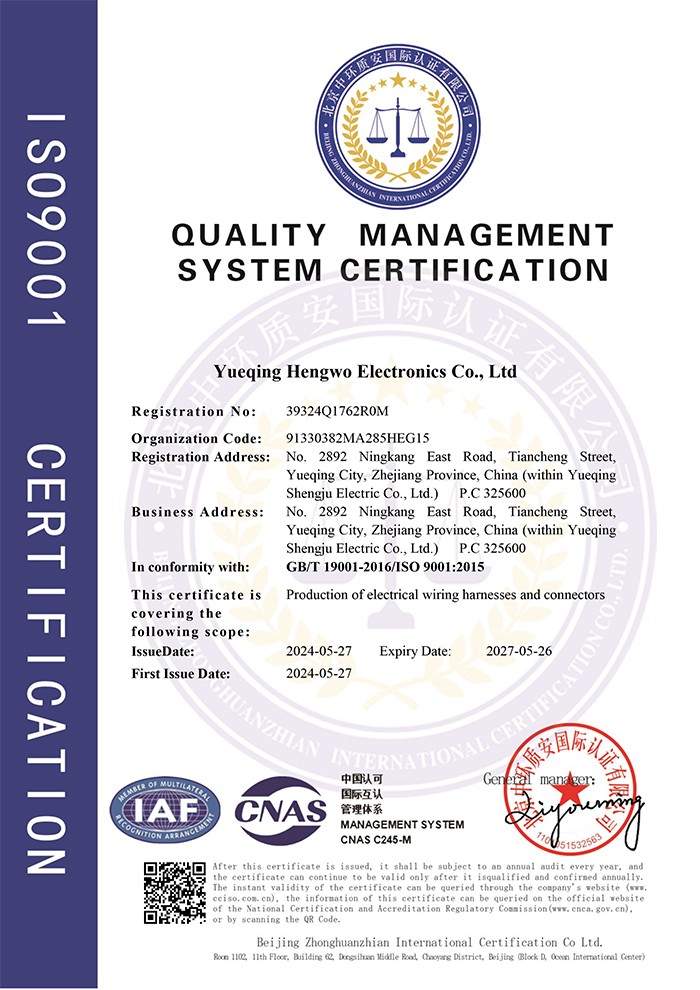
Zhejiang Hengwo Electronics Co., Ltd. is located at the southern foot of the national scenic area Beiyan Dang Mountain, east of the Yueqing Bay Deepwater Port, south of the Yongtaiwen Expressway, and 60 kilometers southwest of Wenzhou Airport. The geographical location is very convenient. It is a professional China Hardware Stamping manufacturer and wholesale Hardware Stamping factory. The products are widely used in LED display screens, lighting, machine tool equipment, communication electrical, mechanical electronics, magnetic relays, transformer meters, new energy batteries, automotive wiring harnesses, home appliances and other industries.
The company has strong technical strength and has a professional team with middle and senior professional titles integrating "development, design, and manufacturing". It has independent product design and development technology and a complete management system. It can develop various types of connectors according to the special requirements of customers and can meet the different needs of customers in all aspects. The products are deeply recognized and trusted by customers, especially in the household appliance connector industry. It has a high reputation.
The company specializes in the production of various models of bar connector series, needle seat terminals, wiring harness series, relay hardware plastics and other products. All employees of Zhejiang Hengwo Electronics Co., Ltd. adhere to the purpose of "integrity, pragmatism, refinement and innovation", always take "pragmatic innovation, quality first, customer satisfaction" as the business philosophy, and become a leader in the industry with reliable product quality and excellent service, and make unremitting efforts to become famous throughout the country.
In modern manufacturing, producing consistent, durable, and precise metal parts is essential. Hardw...
READ MOREAn Energy Storage Harness is a specialized assembly used to connect and manage energy storage devic...
READ MOREA Lithium Battery Wiring Harness is an assembly of cables, connectors, and protective components de...
READ MOREAn Automotive Wiring Harness Factory plays a crucial role in the automotive industry by supplying wi...
READ MOREA Hardware Stamping Factory plays a crucial role in modern manufacturing by providing precise metal ...
READ MOREHardware Stamping refers to the process of forming metal sheets into precise shapes through mechanical force. In many factories, this method supports the creation of components for machinery, electrical devices, and automotive assemblies. Because the process can handle large quantities, manufacturers rely on it to keep part specifications consistent while maintaining stable production cycles.
For industries that demand durable connectors, brackets, or structural pieces, this technique remains a fundamental method for shaping parts with repeatable accuracy.
Stamped Hardware Parts are widely adopted because they offer reliability and dimensional consistency. As production lines move toward automation, these parts support quick installation and reduce error rates during assembly.
Industrial sectors such as transportation equipment, appliance manufacturing, and electronic device assembly depend on these pieces to keep systems functional and steady.
In addition, these components allow engineers to design compact structures without sacrificing mechanical strength, making them useful across various product categories.
Metal Stamping enables factories to create customized geometries without redesigning an entire manufacturing process. Dies can be adjusted, modified, or replaced to support different thicknesses, bend angles, or surface patterns.
This flexibility allows companies to revise their products when market requirements change. As more industries request lightweight or high-precision structures, this method helps adapt component properties while preserving production stability.
The process generally includes the following stages:
These steps shape reliable components for sectors that demand precision and long-term stability.
|
Application Sector |
Why These Components Are Used |
| Automotive Wiring & Brackets |
Stable geometry ensures secure installation points. |
| Consumer Electronics |
Supports tight internal layouts and lightweight designs. |
| Mechanical Machinery |
Provides structural pieces that tolerate repeated force. |
| Electrical Equipment |
Offers conductive or supportive parts with steady dimensions. |
Components produced through Hardware Stamping, Stamped Hardware Parts, and Metal Stamping processes support all four sectors, though each field applies them in slightly different ways.
Several variables affect the final outcome:
Quality engineers closely monitor these factors to maintain production consistency and avoid structural deviations.
To increase stability and throughput, companies are adopting:
These approaches help enhance production flow without compromising component accuracy.
Industries are moving toward more compact devices, lighter materials, and multi-function components. As a result:
These trends encourage manufacturers to develop better tooling strategies, improved production monitoring, and more adaptable processes.
 No. 2892, Ningkang East Road, Tiancheng Industrial Zone, Yueqing City, Wenzhou City, Zhejiang Province, China
 +86-577-62315298
 +86-577-62312718
 hiwotek@163.com
