

 English
 русский
 Español
 中文简体
中文简体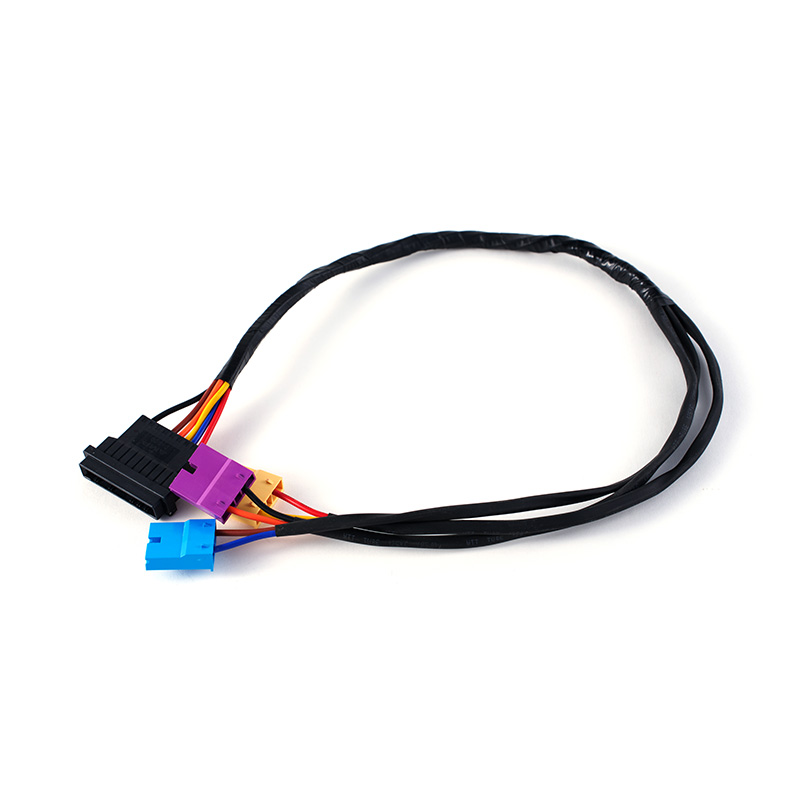
Household appliances depend on efficient and reliable electrical connections. From a manufacturer's perspective, producing a Household Appliances (Equipment) Wiring Harness involves careful material selection, precise assembly, and rigorous quality control. The wiring harness must handle electrical loads safely, fit into compact appliance designs, and remain durable over the product's lifetime.
Material Selection
The foundation of a high-quality wiring harness is the selection of wires, insulation, and connectors. Manufacturers use copper or tinned copper conductors for electrical conductivity and resistance to corrosion. Insulation materials, such as PVC, Teflon, or silicone, are chosen for flexibility, heat resistance, and durability. Connectors are made from durable polymers or metals to ensure secure connections. Sample testing of wire resistance, flexibility, and insulation thickness is carried out to ensure that every Household Appliances (Equipment) Wiring Harness meets safety and performance standards. Manufacturers may also verify chemical stability and flame retardancy of insulation materials to comply with regulatory requirements.
Wire Routing and Design
Designing a wiring harness for household equipment involves mapping the electrical paths and ensuring proper organization. Manufacturers create harness layouts that minimize wire length, reduce interference, and allow easy assembly into appliances. Using CAD software and prototypes, designers simulate electrical flow and check mechanical stress points. Specialized clamps, clips, and protective tubing are incorporated in the design to prevent abrasion or pinching during installation. The design ensures that each Household Appliances (Equipment) Wiring Harness fits the appliance without strain or risk of wear.
Assembly and Integration
Assembly of a wiring harness combines wires, connectors, terminals, and protective elements. In manufacturing facilities, semi-automated machines cut, strip, and crimp wires with precision. Skilled technicians oversee the process to ensure consistent quality and accurate placement. Protective sleeves, cable ties, and insulation tubing are added to prevent wear and improve durability. Each Household Appliances (Equipment) Wiring Harness undergoes checks for proper alignment, secure attachment of all components, and correct polarity before moving to functional testing.
Quality Control and Testing
Quality control is central to wiring harness production. Manufacturers perform continuity tests to verify electrical paths and resistance checks to ensure low voltage drop. Mechanical testing simulates vibration, bending, and flexing to ensure durability under real-world appliance use. Environmental testing may include exposure to heat, moisture, and chemicals to verify insulation integrity. Functional testing is performed to ensure that connectors and terminals properly engage and the harness performs reliably in the appliance assembly. Any defective harnesses are corrected or discarded. These procedures guarantee that every Household Appliances (Equipment) Wiring Harness leaving the factory is reliable and safe.
Packaging and Traceability
After assembly and testing, wiring harnesses are packaged carefully to prevent tangling or damage during shipping. Manufacturers include labels, batch codes, and documentation for traceability. Packaging may also provide instructions for assembly into appliances or storage recommendations. Proper packaging ensures that each Household Appliances (Equipment) Wiring Harness reaches the appliance assembly line ready for immediate installation and maintains its quality until use.
From a manufacturing standpoint, producing a Household Appliances (Equipment) Wiring Harness involves attention to materials, precise assembly, functional testing, and comprehensive quality control. Each step, from wire selection to final packaging, is monitored to ensure consistent quality and safety. By maintaining careful manufacturing protocols, factories deliver wiring harnesses that provide reliable electrical connections, long-term performance in household appliances, and compliance with regulatory standards, meeting both operational requirements and customer expectations.


