
 English
 русский
 Español
 中文简体
中文简体Open up any modern appliance and you'll see wires going everywhere. Washing machines. Refrigerators. Dishwashers. Ovens. Without a proper wiring harness, assembly takes forever and troubleshooting is a nightmare. A household equipment wiring harness manufacturer produces the organized bundles of wires that connect all the electrical components inside these appliances. It's what makes assembly faster, service easier, and the appliance more reliable.
What a Wiring Harness Does Inside an Appliance
It connects all the electrical components
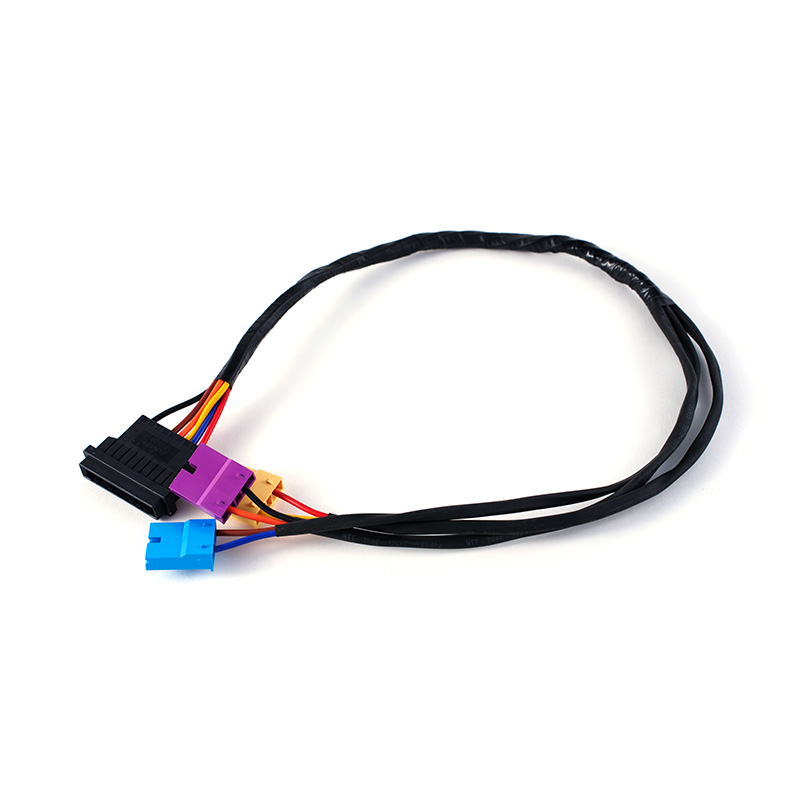
A washing machine has a motor, water valves, a control board, a door lock, and a pump. Each one needs power and sometimes signal connections. A household equipment wiring harness manufacturer brings all these connections together in one organized bundle. One end plugs into the control board, the other end splits off to reach every component.
It reduces assembly time
Without a harness, workers would have to grab individual wires, strip ends, crimp terminals, and connect them one by one. A household equipment wiring harness manufacturer provides pre-assembled harnesses. The worker just plugs it in and moves on. Assembly time drops from minutes to seconds.
It prevents wiring mistakes
Wrong connections kill appliances. A household equipment wiring harness manufacturer uses color-coded wires and labeled connectors. The control board plug only fits one way. The wire going to the motor is a different color than the one going to the door switch. Assembly workers don't have to think about it—they just match the colors and plug them in.
What Goes into a Household Equipment Wiring Harness
The wires are sized for each circuit
Different circuits need different wire gauges. A household equipment wiring harness manufacturer uses 18 AWG or 20 AWG for control circuits. 16 AWG or 14 AWG for power circuits. The insulation is rated for the temperature inside the appliance.
The terminals are crimped onto the wire ends
Spade terminals, ring terminals, pin terminals—each one matches the component it connects to. A household equipment wiring harness manufacturer uses the right terminal for each connection. The crimps are consistent and secure.
The connectors hold everything in place
Plastic housings hold multiple terminals in one block. A household equipment wiring harness manufacturer uses connector blocks that only fit one way. Can't be plugged in backwards. Can't be plugged into the wrong place.
Common specs for household equipment wiring harnesses:
- Wire gauges: 14 AWG to 22 AWG
- Insulation: PVC, XLPE, silicone (high temp)
- Terminals: spade, ring, pin, quick-disconnect
- Connectors: Molex, JST, TE, custom molded
- Bundling: cable ties, spiral wrap, nylon sleeving
- Labels: heat-shrink, adhesive tags, printed markers
- Testing: continuity, hipot, insulation resistance
Where Household Equipment Wiring Harnesses Are Used
Washing machines and dryers
Motors, pumps, heaters, water valves, door locks, control boards—a washing machine harness has all of these. A household equipment wiring harness manufacturer produces harnesses that run from the control board to every corner of the machine. Wrapped and routed to stay out of the way of moving parts.
Refrigerators and freezers
Compressor, defrost heater, evaporator fan, condenser fan, thermostats, door switches, control panels. A household equipment wiring harness manufacturer keeps everything connected and organized behind the back panel. Wires are color-coded and connectors are specific to each component.
Dishwashers
Water inlet valve, circulation pump, drain pump, detergent dispenser, heating element, control board, door latch. A household equipment wiring harness manufacturer bundles and routes all these connections. The entire harness slides into place during assembly.
Ovens and cooktops
Heating elements, thermostat, oven light, fan, control board, touch panel. Temperature is a factor here. A household equipment wiring harness manufacturer uses higher-temperature wire insulation—silicone or fiberglass, not just PVC.
What to Look For
Wire gauge and insulation
The wire has to be thick enough for the current and rated for the temperature. A household equipment wiring harness manufacturer should spec the right gauge for each circuit and use insulation that matches the appliance's operating environment.
Terminal crimp quality
Bad crimps create resistance. Resistance creates heat. A household equipment wiring harness manufacturer that does quality crimps uses the right tooling, verifies pull-off strength, and checks every terminal.
Routing and fit
The harness has to fit inside the appliance. A household equipment wiring harness manufacturer builds to a specific routing diagram. Branches at the right points. Lengths are correct. Too short and it doesn't reach. Too long and it gets in the way.
Testing and labeling
Every harness should be tested before it ships. Continuity. Shorts. Correct termination. A household equipment wiring harness manufacturer runs electrical tests on every unit. Clear labels on each wire make assembly faster and service easier.
A household equipment wiring harness manufacturer makes appliances possible. The harness connects everything, speeds up assembly, and prevents mistakes. Choose one with quality materials, precise crimping, proper routing, and thorough testing. That's the difference between a reliable appliance and one that comes back for repairs.