
 English
 русский
 Español
 中文简体
中文简体Open any industrial panel, HVAC unit, or power distribution cabinet. Inside, there's a tangle of wires—but not a tangle. Each wire is cut to length, stripped, terminated, and bundled into a harness that connects relays to transformers, sensors to controllers, power to loads. Behind every organized, reliable bundle stands a relay transformer wiring harness factory, a facility that assembles the cables that carry signals and power between the components that make electrical systems work.
Why a Harness Is Better Than Loose Wires
Loose wires create maintenance nightmares
Open a panel with loose wires. They cross over components, block labels, and make tracing a circuit a guessing game. A harness bundles wires by function—control signals together, power circuits together, ground returns together. A relay transformer wiring harness factory uses cable ties, lacing cord, or expandable sleeving to group wires cleanly and create a panel that technicians can troubleshoot in minutes rather than hours.
Loose wires short-circuit over time
An unsecured wire vibrates against sharp edges, wears through insulation, and finds an adjacent terminal. The short may happen immediately or months later, after the equipment is in production. A harness secures wires away from hazards and uses sleeving or conduit where abrasion risk is high. A relay transformer wiring harness factory also separates control from power wiring to prevent induced voltage from disturbing sensitive signals.
Loose wire terminations fail from vibration
Every time a wire moves, its terminal connection frets. Screws loosen. Crimps work-harden and crack. A harness anchors the wire to the panel or duct, so movement stops at the termination point. The connection stays tight and conductive for the life of the equipment.
What Goes Into the Harness
Terminals and connectors determine reliability
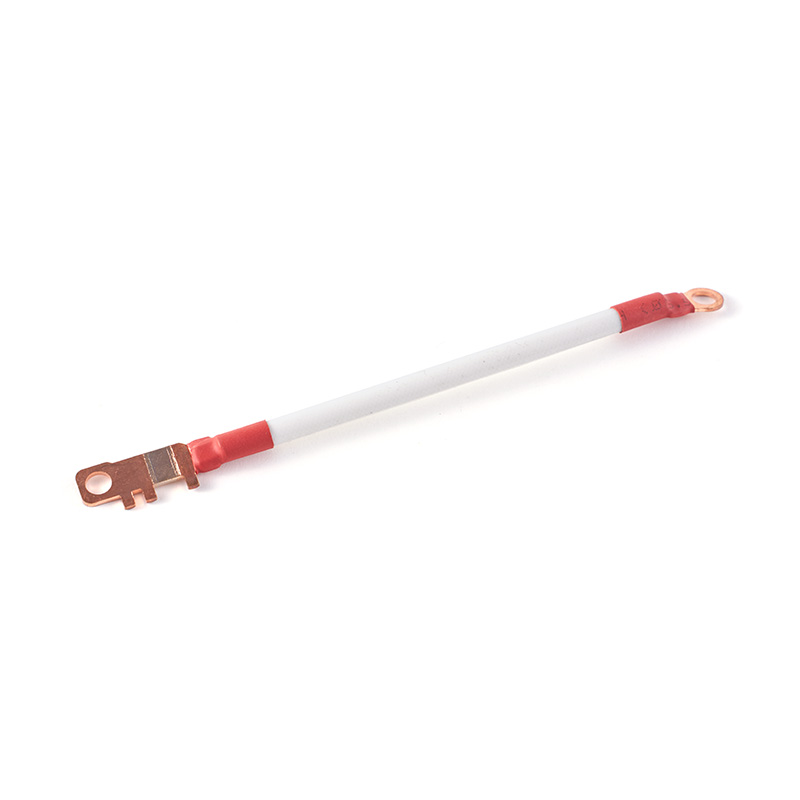
Every wire ends in a terminal—a crimp-on pin, socket, spade, or ring. That terminal must match the relay base or transformer terminal block precisely. A relay transformer wiring harness factory uses precision crimping tools with documented pull-test results, because a loose crimp generates heat and fails first. Multi-pin connectors are used where the harness must disconnect for maintenance; they must key to prevent incorrect insertion and lock to prevent vibration-induced separation.
Protection keeps the harness alive
Expandable sleeving guards against abrasion. Spiral wrap allows mid-run breakout points. Heat-shrink tubing seals splices and marks identification. A relay transformer wiring harness factory applies protection appropriate to the environment—more in wet or dirty locations, less in clean, dry panels.
How the Harness Is Built
Terminating each wire under tension control
Stripped ends are crimped with terminals using pneumatic or hydraulic crimpers. A relay transformer wiring harness factory monitors crimp height and width continuously and performs pull tests on sample wires from each run. Pull strength must meet the terminal manufacturer's specification or higher.
Routing and bundling in a wiring jig
Wires are laid into a jig—a board with pins that hold each wire in its correct position and path. The jig ensures every harness comes out identical. A relay transformer wiring harness factory uses the jig to establish breakout points where wires leave the bundle to connect to individual relays or transformers.
Testing before it leaves the factory
Every harness is continuity-tested to confirm all connections are correct. Many are hi-pot tested to verify insulation integrity at elevated voltage. A relay transformer wiring harness factory documents test results and assigns a serial number for traceability.
Types of Harnesses for Different Jobs
Control harnesses handle low-voltage signals
These use fine-gauge wire, often 22 or 24 AWG, with high-density connectors. They carry signals from relays to PLC inputs and from sensors to relay coils. A relay transformer wiring harness factory uses twisted pairs or shielded cables for these to prevent noise pickup from nearby power wiring.
Power harnesses carry high current
These use 14 AWG or heavier wire with large terminals. They connect transformer secondaries to motors, heaters, and main contactors. A relay transformer wiring harness factory uses insulation rated for the voltage and temperature of the circuit and may add ferrules to terminate stranded wire under screw terminals.
Combination harnesses mix both with separation
Many panels need control and power in one bundle. A relay transformer wiring harness factory routes control wires separately from power wires within the harness, often using a divider or separate sleeving, to maintain signal integrity while keeping the panel organized.
What Separates a Good Factory
Crimp quality is everything
A good crimp is gas-tight, with consistent compression. Pull-test records should show each terminal type meeting specification. A relay transformer wiring harness factory with calibrated crimpers and trained operators delivers harnesses that don't fail at the connection.
Accuracy in routing and length
Every harness must match the drawing exactly. A wire that's 2 inches too short won't reach its terminal. One that's too long creates a service loop that clutters the panel. A relay transformer wiring harness factory uses jigs and measurement checks to hold tolerances.
Labeling and documentation
Every wire should carry an identifier—printed directly on the wire, on a clip-on marker, or on a label at each end. Documentation should include a wiring diagram and a continuity test report. A good factory provides these as part of the product, not as an extra.
Support for modifications
Design changes happen. A relay transformer wiring harness factory that can adjust quickly—whether re-routing a wire, changing a connector, or adding a branch—saves development time and protects against production delays.
A relay transformer wiring harness factory produces the organized wiring that makes electrical panels reliable and maintainable. The good ones control stripping accuracy, crimp quality, routing precision, and testing thoroughness. They offer control harnesses, power harnesses, and combinations with proper separation. They label and document everything. The result is a harness that installs quickly, lasts for years, and makes troubleshooting simple. Choose a factory that treats wiring as the critical path it is.